Vedic Astrology, Clearly Explained
Doshas, planets, yogas, dasha periods, remedies — straightforward guides written by people who care about getting it right. Free, no signup.

The 9 Grahas: Meet the Planets of Your Kundli
A quick tour of the nine planets Vedic astrology uses — what each one governs, which weekday and direction it rules, its exaltation and debilitation signs, and its gemstone. The starting point before any deeper study.
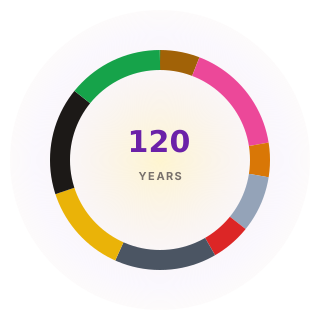
Vimshottari Dasha: Your 120-Year Life Map
The most-used timing system in Vedic astrology divides your life into nine chapters totalling 120 years — each ruled by one planet. Understanding your current mahadasha and antardasha is the single most useful timing skill in Jyotish.

Surya (Sun): The Soul of Your Chart
Sun is the atma-karaka — the significator of your soul, self, vitality, and father. Where Sun sits shapes your identity, authority, and how you show up in the world. The most-quoted planet in classical Vedic literature, and the anchor of any reading.

Chandra (Moon): The Mind and Emotional Weather of Your Chart
Where Sun is the soul, Moon is the mind. Your Janma Rashi (Moon sign), your emotional patterns, your relationship with your mother, and your inner well-being — Moon governs all of it. In Vedic astrology, Moon often matters more than Sun for day-to-day life.

Guru (Jupiter): The Great Benefic and Teacher
Jupiter — Guru, Brihaspati — is the planet of wisdom, wealth, children, and dharma. The single most benevolent graha in the Vedic system, and often the one that decides whether a life feels expansive or constrained. Understanding your Jupiter is understanding what protects you.

Mangal (Mars): The Warrior Planet — Energy, Courage, and Manglik
Mars is the karaka of courage, physical strength, siblings, and property — and the planet behind the most-searched dosha in Indian astrology. Understanding Mars means understanding your fight, your drive, and your capacity to act decisively when it matters.

Shukra (Venus): Love, Marriage, Comfort, and the Feminine Principle
Venus is the karaka of marriage, romantic love, and material comfort — the planet that decides how much beauty, pleasure, and connection your life holds. Understanding Venus is understanding what you're drawn to and how you experience partnership.

Budha (Mercury): The Planet of Intellect and Communication
Mercury governs your mind's analytical layer — how you speak, think, learn, calculate, and do business. Understanding Mercury tells you how you process information, why you communicate the way you do, and where your intellectual edge lies.

Rahu: The Dragon's Head — Hunger, Obsession, and Foreign Paths
Rahu is a mathematical point, not a physical planet — but its influence on your chart is anything but subtle. Where Rahu sits shapes what you obsessively chase, where you'll travel, what unconventional path calls you, and what your soul came here to explore in this lifetime.

Ketu: The Dragon's Tail — Detachment, Moksha, and Past-Life Karma
Ketu is Rahu's cosmic counterpart — the released half of the same karmic story. Where Rahu chases outward, Ketu drops inward. Where Rahu wants more, Ketu wants less. Understanding your Ketu tells you what you've already mastered in past lives and what your soul is here to release.
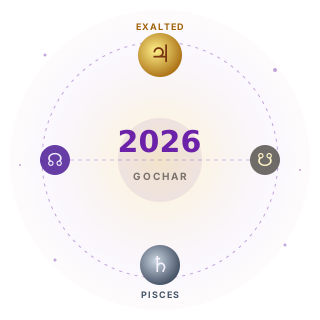
Gochar 2026: The Year's Major Planetary Transits and How They Affect Your Rashi
2026 is a rare year — Jupiter exalted in Cancer for the full year, Saturn still testing Aquarius/Pisces/Aries Moons via Sade Sati, and the Rahu-Ketu axis shifting into Capricorn-Cancer in December. Here's what's happening in the sky and what it means for each Moon sign.
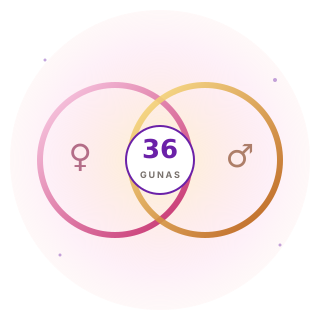
Kundali Matching: The 36-Guna Compatibility System Explained
Before Indian marriages, families traditionally match Kundlis to check compatibility. The Ashtakoot Guna Milan system scores compatibility on 36 points across 8 factors. Here's what each of the 8 factors measures, what the total score really means, and why it's not the whole story.

Sun Mahadasha: 6 Years of Authority, Vitality, and Visibility
Sun's Mahadasha is short (6 years) but intense. Career visibility rises, father / authority themes activate, and the mandate is to become someone. What each of the nine antardashas within Sun Maha tends to bring, and how to make the most of the period.
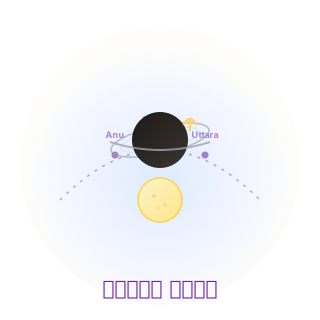
Sade Sati: The 7.5-Year Saturn Lesson, Without the Fear
Saturn's transit across your Janma Rashi over 7.5 years — the most-feared transit in Vedic astrology and the most misunderstood. The three phases, what each really teaches, classical remedies, and why most lives are better on the other side.
Kaal Sarp Dosh: What It Really Is, What It Isn't, and Healthy Scepticism
When all seven planets sit between Rahu and Ketu in your chart. The most over-diagnosed and over-feared condition in modern Vedic astrology — and the cancellation rules the "dosha removal" industry doesn't want you to know.
Shani (Saturn): The Misunderstood Karmic Teacher
The slowest-moving graha, the karmic taskmaster, the most-feared and most-essential planet in your chart. Why Saturn isn't the villain, what strong vs weak Saturn actually means, and the practical way of living that Saturn rewards.

Rahu Mahadasha + Ketu Antardasha: Surviving the Nodal Axis Flip
The exact transition Reddit asks about: Rahu's 18-year outward hunger meeting Ketu's ~12-month inward release. What it feels like, why it hits so hard, what the classical texts say, and how to make it through.
Manglik Dosh: What It Really Means, How to Check, and Remedies
A clear, honest guide to Manglik Dosh — what it actually is, the houses that cause it, the cancellation rules most websites skip, and the remedies classical texts recommend.

Bharani Nakshatra: The Bearer at the Threshold of Birth and Death
Bharani is the second nakshatra — 13°20' to 26°40' of Aries. Ruled by Venus with Yama as its deity, its symbol is the yoni (womb). Bharani natives are the bearers — intense, sensual, unafraid of transformation.
Krittika Nakshatra: The Sacred Fire That Reveals
Krittika is the third nakshatra — 26°40' Aries to 10°00' Taurus. Ruled by the Sun with Agni as its deity, symbolised by a razor or flame. Krittika natives are the truth-tellers — sharp, purifying, and unable to look away from what others avoid.

Jupiter Remedies: Guru Blessings, Wisdom Practices, Yellow Sapphire Guide
Jupiter (Guru / Brihaspati) is Vedic astrology's great blessing — karaka of wisdom, wealth, children, marriage, and dharma. His remedies are among the safest and most effective. This guide covers mantras, good deeds, deity worship, and honest guidance on yellow sapphire without vendor manipulation.

Mercury Remedies: Working with Budha's Intellect Through Vishnu Worship
Mercury (Budha) is Vedic astrology's kumara — karaka of intellect, speech, commerce, and the youthful learning mind. Mercury remedies are among the gentlest in the tradition, grounded in respect for scholars, service to students, disciplined speech, and Vishnu worship. This guide covers mantras, good deeds, deity worship, and honest guidance on emerald without vendor manipulation.
Venus Remedies: Working with Shukra's Grace Through Lakshmi Worship
Venus (Shukra) is Vedic astrology's classical bhogakaraka — karaka of marriage, love, beauty, comfort, and the feminine principle. Venus remedies are among the gentlest in the tradition, grounded in respect for the feminine, aesthetic devotion, and Lakshmi worship. This guide covers mantras, good deeds, deity worship, and honest guidance on diamond without vendor manipulation.
Mars Remedies: Working with Mangal's Energy Through Hanuman Worship
Mars (Mangal / Kuja) is Vedic astrology's warrior — karaka of energy, courage, siblings, and the Manglik marriage pattern. Working with Mars requires channelling his energy, not suppressing it. This guide covers mantras (especially Hanuman practices), good deeds, deity worship, and red coral guidance without vendor manipulation.

Saturn Remedies: The Classical Vedic Approach to Working with Shani
Saturn is Vedic astrology's most-feared planet and the most misunderstood. This guide walks through the genuine classical remedies from Rao's Ch. 34 — mantras, good deeds, deity worship, and the critical warnings about blue sapphire — without the vendor manipulation that dominates online content.

Why Is My Marriage Delayed? 7 Chart Signals from Your Kundali
Marriage delay is one of the most common Vedic astrology questions — and one where classical analysis differs sharply from fear-based online content. This guide walks the 7 chart signals (7th house, Venus/Jupiter, Manglik, current Dasha, Navamsha, Kundli matching, karmic dispositor) with honest classical framing.

Why Do I Keep Losing Money? 7 Chart Signals for Financial Struggles
If money keeps slipping through your hands, Vedic astrology has a specific framework for understanding why. Walks through 7 wealth-related chart signals — 2nd house, Jupiter, 11th house, classical Dhana Yogas, Daridra Yogas, current Dasha, Rahu-Ketu axis — with genuine remedies and honest patterns.

Why Your Career Is Not Progressing: 7 Chart Signals to Check in Your Kundali
If you feel your career keeps stalling despite hard work, Vedic astrology has a specific framework for understanding why. This guide walks through the 7 chart signals — 10th house, Sun, Saturn, Dashas, 6th/8th houses, career yogas, Rahu-Ketu axis — with what each affliction means and what to do.

Saturn in the 10th House: Career Effects, Timing, and Remedies
Saturn in the 10th house is one of the most misread placements in Vedic astrology. It is his digbala — his strongest directional placement. The pattern is delay-then-elevation, not blockage. Here is what Saturn-in-10 actually does, when it manifests, and how to work with it.
Career During Sade Sati: The 7.5-Year Career Reckoning
Sade Sati is often felt at work first. The Arambha, Madhya, and Uttara phases each have a specific career arc — quiet restructuring, forced pivots or breakthroughs, and slow rebuild. Here is what actually happens in each phase, when to change jobs, why some people get promoted, and what to do if you have just been laid off mid-transit.
Debilitated Sun in Your Kundli: Why Authority Feels Off and How to Fix It
Sun debilitated in Libra is one of the most common 'why do I struggle with authority' chart signatures. It does not remove capability — it reshapes leadership into negotiation-forward, coalition-holding, advisory forms. Here is what the placement actually does, the Neecha Bhanga cancellations most explanations miss, which careers suit debilitated Sun natives, and honest classical remedies.
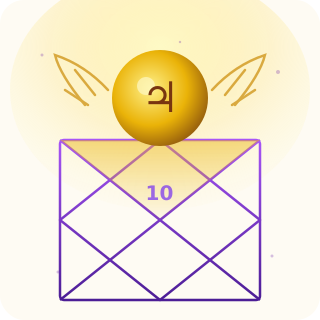
Jupiter in the 10th House: Career, Hamsa Yoga, and the Dharmic Path
Jupiter in the 10th house is a natural karaka in the karma house — wisdom applied to profession. When Jupiter sits here in Cancer, Sagittarius, or Pisces, he forms Hamsa Yoga — one of the five Panch Mahapurush yogas — producing a lifelong gift of scholarly authority. When debilitated in Capricorn or afflicted, the karma-dharma path stalls. This guide covers the Hamsa Yoga configuration, the debilitated pattern, per-ascendant variations, the career fields Jupiter actually supports, and honestly what this placement does NOT automatically produce.
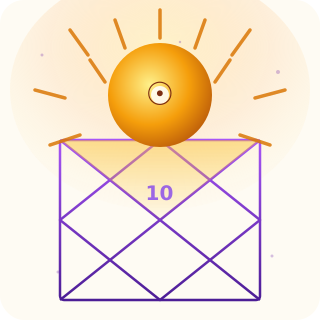
Sun in the 10th House: Career, Authority, and the Digbala Signature
Sun in the 10th house is one of the strongest career placements in Vedic astrology — the natural karaka of the 10th, holding his digbala there. The pattern is natural authority rather than fought-for authority. But the placement's dignity, sign, and Dasha timing determine whether it produces the classical government/leadership outcomes or ego problems and father struggles. This guide walks the strong pattern, the shadow pattern, per-ascendant variations, timing windows, the father signature, and honest remedies scoped to your specific Sun.
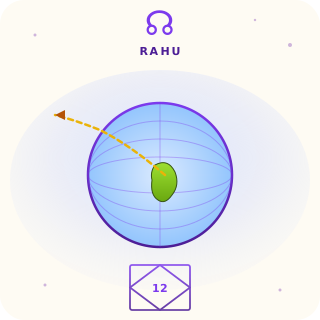
Foreign Career Yoga: When Your Kundali Points Abroad
Vedic astrology has specific classical signatures for a foreign life — but "foreign" is not one thing. The 4th (home), 7th (foreign travel), 9th (long journeys), and 12th (foreign residence) houses each read differently. Rahu is the karaka of foreign matters; his placement in the 12th, 9th, or 7th, combined with 12th lord condition and Moon involvement, produces the strongest foreign-life yogas. This guide covers the classical distinctions, primary indicators, uprooting signatures, Dasha activation windows, migration types, and the honest limits on what any chart can say about a specific visa outcome.
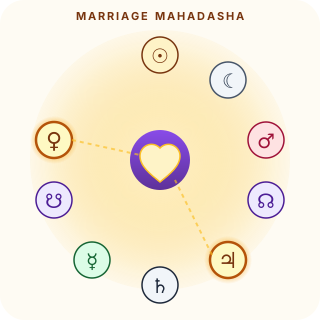
Marriage Timing by Mahadasha — Which Vimshottari Dasha Windows Trigger Weddings
Vimshottari Mahadashas do not fire marriage evenly across life. The classical marriage-trigger periods are Venus Mahadasha (20y, strongest for male charts), Jupiter Mahadasha (16y, especially for female charts), the 7th lord's own Mahadasha, and — with caveats — Rahu Mahadasha for unconventional marriage. Within any Mahadasha, Venus-Jupiter and Jupiter-Venus Antardashas are the classical wedding sub-periods. This guide walks each Mahadasha's marriage character, Antardasha refinements, and transit triggers that co-activate.
Love Marriage vs Arranged Marriage — What Your Kundli Actually Shows
Your Kundali does not judge love marriage as better than arranged — it shows which pattern is more natural. Classical Vedic tradition names specific combinations for each: love-marriage yogas (Venus+Rahu, 5th-7th lord exchange, Rahu in 7th, Mars+Venus, Moon+Mars aspects) and arranged-marriage signatures (7th lord in kendra, Jupiter aspect on 7th, strong 4th house family involvement). Most modern Indian charts show a mix; the dominant leaning tells you which path feels effortless. This guide walks each signature set, the mixed case, and Dasha timing.
When Will I Get Married? Reading Marriage Timing in Your Kundli
Your Kundali shows a marriage timing WINDOW, not a specific date. Classical Vedic tradition reads timing through four primary signals: the 7th house condition, the 7th lord's placement, Venus (male chart) or Jupiter (female chart) as karakas, and the current Vimshottari Dasha. When multiple signals converge — a marriage-karaka Mahadasha runs, the 7th lord's Antardasha activates, Jupiter transits over natal 7th — the classical marriage window is at peak. This guide walks each signal, the Dasha triggers, transit refinements, and honest limits on what any chart can say about the specific month.

Job or Business? What Your Kundali Actually Says (Vyapar Yoga Guide)
Your Kundali does not give a yes-or-no answer on job vs business — it gives a leaning through a 5-signal checklist. Classical Vedic tradition names Vyapar Yogas (business combinations) and Naukri indicators (employment combinations); most charts show both with one dominant. This guide walks the checklist, the classical yogas on each side, the mixed case with tiebreakers, and the Dasha windows that classically support switching direction.

10th Lord in the 6th House: When Your Career Feels Like Constant Struggle
The 10th lord in the 6th house — the ruler of the career house sitting in the house of enemies and service — is the classical Vedic signature for careers built through friction. It is not a doomed placement. It produces doctors, litigators, union leaders, HR heads, investigative journalists. This guide walks the core pattern, per-ascendant flavours, when it hurts and when it helps, its relationship to Vipareeta Raja Yoga, Dasha timing, and honest classical remedies.

Rahu Mahadasha and Career: The Confusion Years and How to Navigate Them
Rahu Mahadasha is 18 years — for career, famously the ambition-without-discipline chapter. Sudden foreign or unconventional openings, fast prestige, and structural confusion. Here is what actually happens in each phase, why the confusion is Rahu's design, and what actually helps.
Santan Prapti: 7 Chart Signals for Children Delay in Your Kundli
Children delayed or difficulty conceiving? Classical Vedic astrology reads the question through 7 specific chart signals — 5th house and its lord, Jupiter as karaka of progeny, Saptamsa (D-7) divisional chart, current Dasha, afflictions to the 5th, dispositor patterns, and remedy patterns. Honest framing on how to combine astrology with modern fertility care.
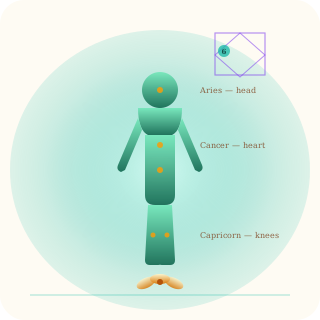
Chronic Health Issues in the Kundli: 7 Chart Signals to Check
Recurring health issues that keep coming back? Classical Vedic astrology reads the karmic side of health through 7 chart signals — Ascendant lord (constitution), 6th house (Roga Bhava), 8th house (chronic conditions), planetary karakas and dhatu rulership, current Dasha, Sade Sati and Ashtama Shani transits, and the Kalapurusha body-region mapping. Honest framing throughout — always alongside a doctor, never instead of one.
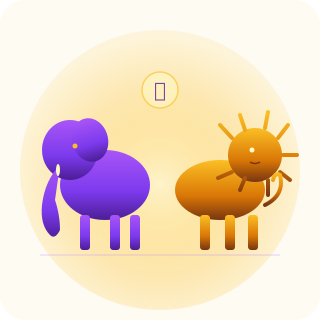
Gajakesari Yoga: The Elephant-Lion Combination of Fame and Wisdom
Gajakesari Yoga forms when Jupiter sits in a quadrant from the Moon with benefic support. Classical texts call it a key yoga for ever-lasting fame, wealth, intelligence, and character. Learn how to check for it in your chart and what it actually produces.

Panch Mahapurush Yoga: The Five Great Person Combinations
Panch Mahapurush Yoga is a group of five classical yogas — Ruchaka (Mars), Bhadra (Mercury), Hamsa (Jupiter), Malavya (Venus), Sasa (Saturn). Each forms when its planet sits in a quadrant from Lagna in own or exaltation sign. Each produces a distinctive type of greatness.
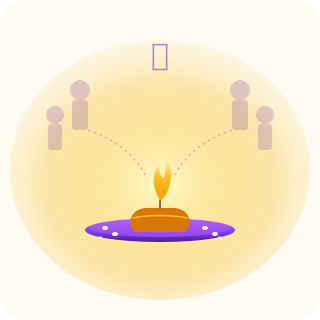
Pitru Dosh: What It Really Means, How to Check, and Classical Remedies
A clear, honest guide to Pitru Dosh — the classical Vedic idea that unresolved ancestral karma can show up as recurring blockages. Covers the real classical basis, the online exaggerations, and the traditional remedies including their honest limits.
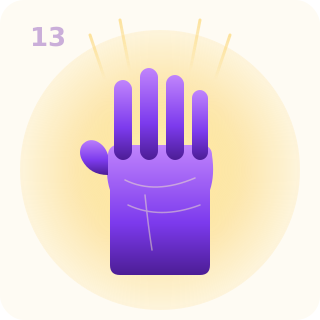
Hasta Nakshatra: Savitar's Skilled Hand — The Healer, The Craftsman
Hasta is the thirteenth nakshatra — Virgo 10°00'–23°20'. Ruled by the Moon with Savitar (the Sun as inspirer) as its deity, symbolised by an open palm. Hasta natives are the skilled hands of the zodiac — dexterous, healing, quietly capable.
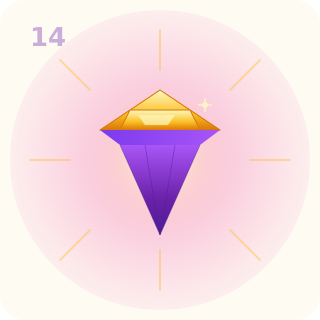
Chitra Nakshatra: Vishvakarma's Dazzling Jewel
Chitra is the fourteenth nakshatra — Virgo 23°20' to Libra 6°40'. Ruled by Mars with Vishvakarma (the divine architect) as its deity, symbolised by a bright pearl or gem. Chitra natives are the striking designers — beautiful, constructive, magnetic.
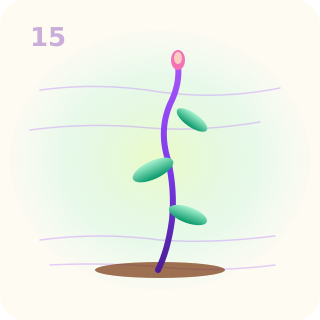
Swati Nakshatra: The Self-Going Wind — Independence and Diplomatic Grace
Swati is the fifteenth nakshatra — Libra 6°40'–20°00'. Ruled by Rahu with Vayu (wind) as its deity, symbolised by a young shoot swaying in the breeze. Swati natives are the independents — self-directed, diplomatic, refusing to be tied down.
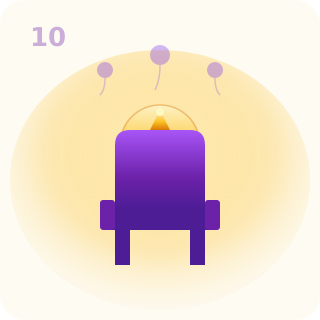
Magha Nakshatra: The Royal Throne of the Ancestors
Magha is the tenth nakshatra — Leo 0°00'–13°20'. Ruled by Ketu with the Pitris (ancestors) as its deities, symbolised by the royal throne. Magha natives carry the classical weight and grace of inherited authority — dignified, ancestrally-carried, quietly royal.
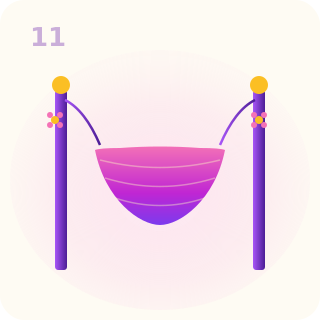
Purva Phalguni Nakshatra: Bhaga's Bed of Delight
Purva Phalguni is the eleventh nakshatra — Leo 13°20'–26°40'. Ruled by Venus with Bhaga (delight, luxury, patron of good fortune) as its deity, symbolised by the front legs of a bed. Purva Phalguni natives are the joyful creators — magnetic, artistic, deeply present to pleasure.
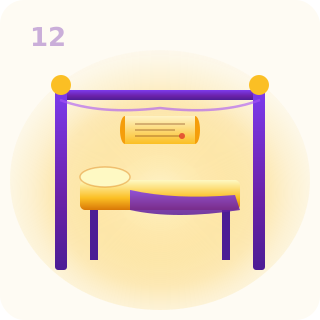
Uttara Phalguni Nakshatra: Aryaman's Contract of Lasting Friendship
Uttara Phalguni is the twelfth nakshatra — Leo 26°40' to Virgo 10°00'. Ruled by the Sun with Aryaman (patron of contracts, friendship, hospitality) as its deity, symbolised by the back legs of a bed. Uttara Phalguni natives are the reliable patrons — steadfast, generous, keepers of long promises.
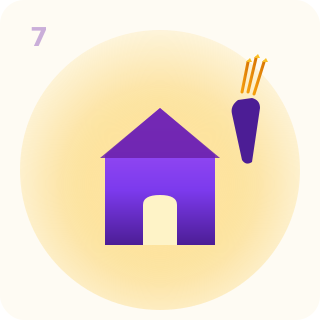
Punarvasu Nakshatra: The Return Home — Aditi's Boundless Renewal
Punarvasu is the seventh nakshatra — Gemini 20°00' to Cancer 3°20'. Ruled by Jupiter with Aditi (mother of the gods) as its deity, symbolised by a quiver of arrows or a house. Punarvasu natives are the renewers — resilient, warm, wisdom-carrying, and always finding their way back.
Pushya Nakshatra: The Nourisher — Most Auspicious of the 27 (Except for Weddings)
Pushya is the eighth nakshatra — Cancer 3°20' to 16°40'. Classical Vedic tradition ranks it the most auspicious nakshatra of the zodiac. Ruled by Saturn with Brihaspati (guru of the gods) as deity. Pushya natives are the quiet teachers and nourishers.

Ashlesha Nakshatra: The Entwiner — Serpent Wisdom and Occult Power
Ashlesha is the ninth nakshatra — Cancer 16°40' to 30°00'. Ruled by Mercury with the Nagas (serpent beings) as its deities, symbolised by a coiled serpent. Ashlesha natives are the mystical readers of hidden patterns — hypnotic, penetrating, capable of both healing and harm.
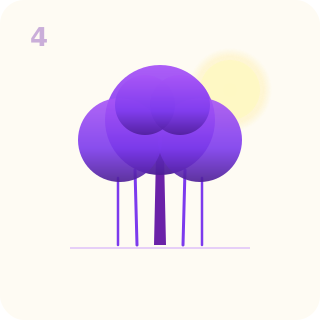
Rohini Nakshatra: The Moon's Favourite, Nakshatra of Growth and Abundance
Rohini is the fourth nakshatra — Taurus 10°00'–23°20'. Ruled by the Moon with Brahma the Creator as its deity, symbolised by a chariot or the banyan tree. Rohini natives are the makers — sensual, magnetic, patient builders of beauty and abundance.
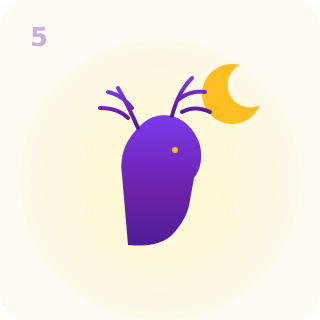
Mrigashira Nakshatra: The Seeker Who Searches for the Nectar
Mrigashira is the fifth nakshatra — Taurus 23°20' to Gemini 6°40'. Ruled by Mars with Soma as its deity, symbolised by a deer's head. Mrigashira natives are the curious wanderers of the zodiac — always searching for the essence beneath the surface.
Ardra Nakshatra: The Storm That Breaks Through — Rudra's Teardrop
Ardra is the sixth nakshatra — Gemini 6°40' to 20°00'. Ruled by Rahu with Rudra (the storm form of Shiva) as its deity, symbolised by a teardrop. Ardra natives carry the classical energy of transformation through crisis — sharp, questioning, capable of breakthrough after storm.

Ashwini Nakshatra: The Celestial Healer, First of the 27 Lunar Mansions
Ashwini is the first nakshatra of the zodiac — the archetype of speed, initiation, and healing. Ruled by Ketu with the Ashwini Kumaras as deities, it defines the personality of anyone born with the Moon in Aries 0°00'–13°20'.
No articles match your search. Try a different keyword or category.
Want it personalised to your own chart?
Get your free Janma Kundli — every dosha, yoga, and dasha checked against your actual placements.
Get my free Kundli →